
You Are Not Alone in This
If Step 1 feels uncomfortable, that’s normal. Most people encountering addiction—whether personally or through someone they love—have already tried many ways to fix the problem. Effort, accountability, good intentions, even prayer can feel like they should be enough.
Step 1 names a hard but hopeful truth: there comes a point when trying harder stops working. That moment is not failure. It is often the first honest step toward real change—for individuals, families, and the churches walking alongside them.
What Step 1 Really Means
Step 1 of the 12 Steps says:
We admitted that we were powerless over our use of substances or behaviors—and that our lives had become unmanageable.
This step is often misunderstood. Powerlessness does not mean a person is weak, irresponsible, or incapable. It means that addiction has reached a point where willpower and good intentions alone are no longer enough.
For those walking alongside someone who is struggling, Step 1 helps explain why repeated promises, consequences, or encouragement often don’t bring lasting change. Addiction reshapes decision-making in ways that make “just stop” an impossible standard.
In the Stepping Into Power framework, the core value of Step 1 is surrender—not as defeat, but as a turning point where reliance shifts from self to God, and from isolation to support.
Surrender vs. Submission
Surrender is often confused with submission, but the difference matters—especially in recovery.
-
Submission sounds like compliance: “I’ll go along with this for now.”
-
Surrender is a decision of the heart: “I cannot win this battle on my own.”
Submission leaves the door open to returning to the same patterns. Surrender closes that door and invites God to take the lead.
For individuals in recovery, this distinction explains why stopping “for a while” so often leads back to relapse. For families and churches, it helps clarify why pressure, ultimatums, or good advice—no matter how well-intended—rarely produce lasting change.
Surrender is not weakness. It is the moment when real power becomes available, because it no longer rests on self-reliance alone.
For Those Who Are Struggling
If you are the one facing addiction, Step 1 offers relief. It does not ask you to explain how you got here or to prove that you want recovery badly enough. It simply asks for honesty.
Many people reach this step after exhausting every other option—trying to control it, manage it, hide it, or bargain their way out. Step 1 names what you may already feel deep down: the struggle has grown bigger than your ability to handle it alone.
Surrender does not mean your life is over. It means you are no longer carrying the weight by yourself. When you stop fighting a battle you cannot win, you create space for God’s power to do what your strength never could.
This step is not about shame. It is about freedom—and it is a place you can return to every day.
DIVE DEEPER INTO STEP 1
Understanding surrender is one thing. Working it out in real life is another.
Whether you are personally walking through recovery, supporting someone you love, or leading a church that wants to respond wisely to addiction, deeper reflection brings clarity and direction.
We’ve created a guided resource to help you take that next step.
Download the Full Step 1 Chapter + Workbook Questions
EXLPORE MORE STEPS
The books that inspired the Stepping Into Power Series
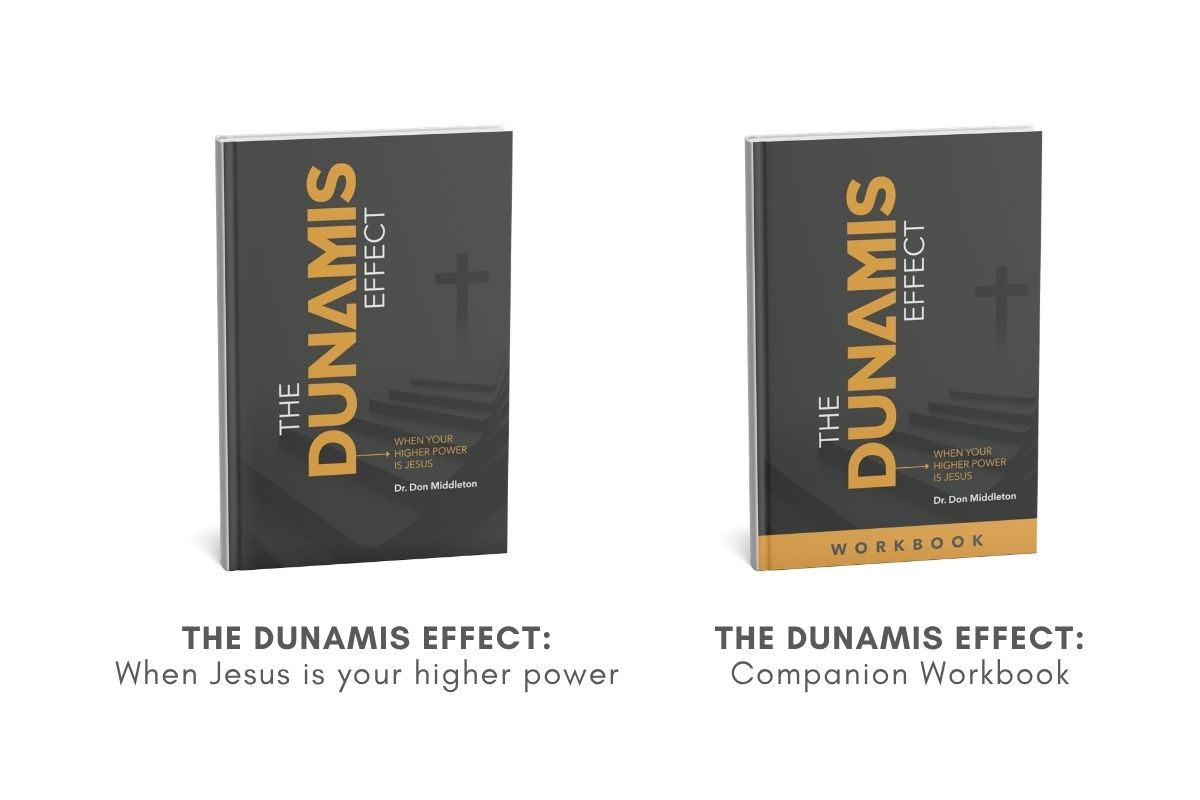
 Experience a powerful, Christ-centered reimagining of the Twelve Steps. The Dunamis Effect blends biblical truth, practical recovery wisdom, and relatable stories to help you break cycles, strengthen your faith, and build a life of lasting freedom. A foundational book for anyone ready to heal from the inside out.
STEP 1 BLOG POSTS

What Does Dunamis Have to Do with Addiction Recovery?
Freedom, Grace, Healing & Transformation, Identity, Individuals in Recovery, Sobriety, Spiritual Growth, Step 1: Surrender

Children of Addicted Parents: Hope for Healing Families
Church Leaders, Families & Loved Ones, Healing & Transformation, Healing the Past, Identity, Individuals in Recovery, Sobriety, Step 1: Surrender, Trauma

Naaman the Leper and Addiction Recovery
Church Leaders, Freedom, Individuals in Recovery, Spiritual Growth, Step 1: Surrender, Step 2: Hope

Christians and AA: Faith, History, and the 12 Steps
Church Leaders, Individuals in Recovery, Professionals in Recovery, Sobriety, Spiritual Growth, Step 1: Surrender, Step 3: Trust

 Every Stepping Into Power chapter guides
 Church & recovery ministry resources
 Recovery coach tools
 Books, publications & teaching materials
 New resources added over time